How to Trade Meme Coins in 2026 Without Blowing Up Your Account
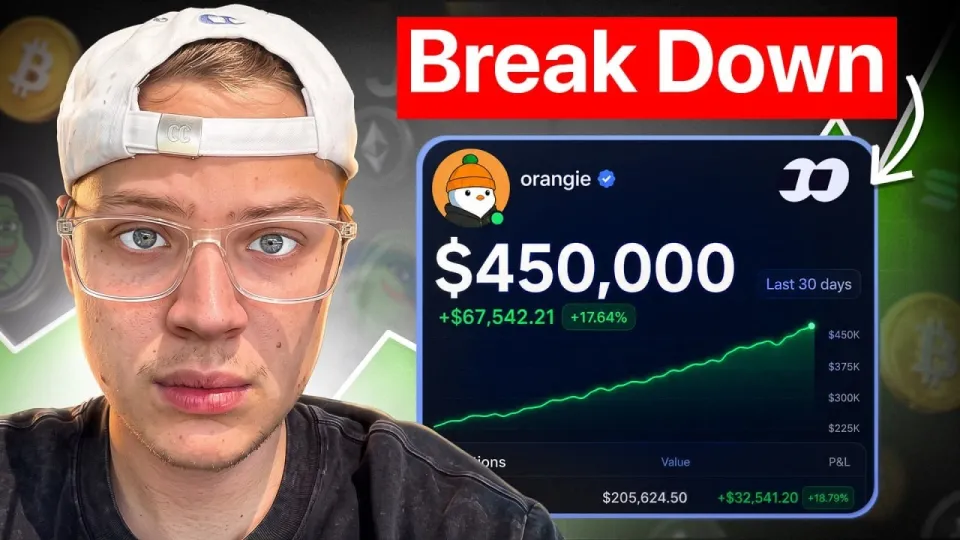
Video: How I Made $450,000 Trading Memecoins in 30 Days
You can order the same kind of articles for your own video to boost it on YouTube and Google. Just message the Telegram bot @sat_sit_bot. The bot writes and publishes the articles itself (with your YouTube video embedded) on popular topical websites (no ads). Try it free: 50 articles on us.
Meme coin trading is the practice of buying and selling tokens with no cash flow, no product and no fundamental valuation, where price is driven almost entirely by attention, liquidity and timing. In the video "How I Made $450,000 Trading Memecoins in 30 Days", Orangie Web3 walks through a month of trades on Solana-style launches and shows how one account can compound quickly when a few positions run. The paid community he points viewers to is available through the Kaizen group checkout, and it is worth understanding the mechanics before paying for any tool.
What a meme coin actually is and why the numbers look absurd
A meme coin is a token whose value rests on a shared joke, a mascot or a cultural moment rather than revenue; its price is a function of how many buyers arrive before sellers do. On Solana, a token can be created in minutes on a launchpad, trade on a bonding curve, and "graduate" to a decentralised exchange once it hits a market-cap threshold — often somewhere in the tens of thousands of dollars. From there, a viral push can take a coin to millions in market cap, which is how a small position turns into a large one.
The $450,000 figure in the video title is a gross result over 30 days, not a salary. It reflects a small number of outsized winners carried against a much larger number of small losses, plus the ability to size up when a trade is already working. Anyone reading that number as a monthly expectation is misreading the distribution: meme coin outcomes are extremely skewed, and the median trade in this niche loses money.
The four stages of a meme coin trade
Every meme coin trade runs through the same four decisions, and skipping any one of them is where most accounts die.
- Sourcing. You need to see a token before the crowd does. That means launch feeds, wallet trackers, and — realistically — a group of people sharing calls in real time. The video's own comment section makes the point bluntly: the trader is in a Discord with fast traders who snipe the coins they call together.
- Entry. You buy into a thin order book. Slippage on a low-liquidity token can cost several percent per side, so a trade that looks flat on the chart can be a losing one after fees and price impact.
- Management. This is where the money is made or lost: taking partial profits into strength, moving the stop, and deciding whether the narrative still has buyers left. Traders who only know how to buy tend to round-trip every winner.
- Exit. Liquidity is the constraint. If you hold a large share of a small pool, your sell is the event that kills the price. Exit plans have to be built around what the pool can actually absorb.
Position sizing and the arithmetic of a hit-driven strategy
Meme coin trading only works as a portfolio of bets, because the payoff is a lottery-shaped distribution and no single trade is reliable. A viewer in the comments describes putting in about $100, losing close to 90% of it while learning the mechanics, then tripling the remainder on one coin — that sequence is the normal shape of the experience, not an unusual failure.
The practical rule is to cap each position at an amount you can lose entirely without changing your behaviour. If a $200 loss makes you hold a loser hoping for a bounce, your position is too big. The corollary is that you should not average down on a token whose only thesis is a meme; adding to a dying launch usually converts a small loss into a total one. Size up only after a position has already proven demand, and take back your initial capital early when a coin doubles or triples.
Why speed, tools and private groups matter more than chart reading
In meme coins, execution speed and information flow beat technical analysis, because there is no earnings report or support level to reason from. The token's entire history might be forty minutes long. What separates profitable traders is how quickly they see a launch, how cheaply they can buy, and how fast they can exit — which is why paid terminals, bots and private calls groups exist and why they charge for access.
That is also the honest caveat to the $450,000 result: the trader in the video has infrastructure most beginners do not. A viewer comment notes that he trades alongside a group of top traders who call coins and help each other out. That is a legitimate edge, but it is not something a $100 account replicates by watching a video. Treat tools like the linked FOMO trading platform as execution and discovery infrastructure, not as a signal service that guarantees winners.
Common questions and misconceptions from new traders
The recurring doubts in the comments are about pace, clarity and whether the strategy is repeatable, and each has a straightforward answer. Many viewers say the material moves fast and jumps between points; the fix is to slow the video down and write down one setup at a time instead of trying to absorb everything in a single pass. Others ask why a trade that looked good went nowhere — usually because they entered after the move, into liquidity that was already thinning.
A third group wants entry and exit reasoning spelled out trade by trade, which is a fair request: reviewing your own entries and exits is the fastest way to learn. And a fourth group treats a single winning coin as proof of a system. One triple on a small position is evidence that the payoff structure exists, not evidence that the next ten trades will work. Track your results over at least fifty trades before concluding anything about skill.
Risks that decide whether you survive the first month
Surviving long enough to catch a winner is the actual skill in meme coin trading, and the risks are mostly structural rather than psychological. Rug pulls and liquidity removals can take a token to zero in a single block. Bundled launches, where one entity holds most of the supply, mean you are buying the exit liquidity of the deployer. Sniper bots front-run retail entries on popular launches, so your fill is worse than the chart suggests. And on-chain, a single mistaken contract approval or a copy-pasted address can drain a wallet independently of any trade.
Operationally, that means using a dedicated wallet with limited funds, revoking approvals, checking holder distribution before buying, and never connecting a main wallet to an unverified site. It also means accepting that a large share of your trades will be losses, and that the strategy only has positive expectancy if you keep the losers small.
Useful links
- Kaizen group access and checkout: https://whop.com/checkout/plan_GTFkEFh0JFpU8?a=orangie
- FOMO trading platform referral link: https://fomo.family/r/orangie
- Orangie's Discord community: https://discord.gg/memecoins
- Instagram: https://www.instagram.com/orangieyt/
Final takeaway
Meme coin trading is a high-variance, execution-driven activity where a small number of large winners pay for many small losses, and the $450,000 month shown by Orangie Web3 is a best-case illustration of that structure rather than a forecast. The transferable lessons are unglamorous: size positions so a total loss is survivable, take profits into strength, watch liquidity instead of charts, and treat speed and information as the real edge. Anyone considering the paid route can start with the Kaizen group checkout, but should go in expecting to pay tuition before seeing a hit. The full walkthrough and trade commentary come from the Orangie Web3 channel, which is the right place to see the reasoning behind individual entries and exits.
Key takeaways
- Orangie Web3's video "How I Made $450,000 Trading Memecoins in 30 Days" frames meme coins as a high-variance, hit-driven strategy rather than steady income.
- Most retail attempts start on Solana launchpads, where new tokens can go from a few thousand dollars of liquidity to six-figure market caps within minutes.
- A single winner is expected to pay for many losers: viewers describe losing roughly 90% of a $100 position before one coin tripled their money.
- Access to fast tools and private trader groups is a real edge, and a top-liked comment on the video points exactly at that advantage.
- The trader behind the video sells nothing as a guarantee: the linked Kaizen group and FOMO platform are tools and communities, not return promises.
Source: How I Made $450,000 Trading Memecoins in 30 Days · Markdown version
Questions & answers
Can you realistically make $450,000 in 30 days trading meme coins?
It is possible but statistically rare, and it depends on a handful of outsized winners plus the ability to size into them. The result in the video reflects a trader with fast tools, a private network and prior experience. Treat it as an illustration of the payoff distribution, not as an expected monthly return.
How much money do you need to start trading meme coins?
You can start with a small amount, but the account has to be money you can lose entirely, because a large share of trades go to zero. Many beginners start with a few hundred dollars specifically to learn execution, slippage and exits. Position size should be set by what you can lose without changing your decisions, not by the profit you hope to make.
Why do most new meme coin traders lose money?
They buy after the move is visible, into thin liquidity, without an exit plan, and they average down on tokens that are already dying. Fees, slippage and bundled supply quietly eat the rest. The traders who last keep losers small and take partial profits early instead of waiting for a tenfold.
Are paid trading groups and platforms worth it for meme coins?
They can shorten the learning curve by giving faster discovery and execution, but they do not remove risk and no group can guarantee winners. Judge them on transparency about losses, not on screenshots of gains. Start with a small allocation and verify that the tools actually improve your fills before scaling up.